

History of Berliner Weisse
...or how the crook Cord Broian took a Flemish recipe
It is not known exactly where and when the first Berliner Weisse was brewed (those who know are silent or dead), but rumour has it that an unnamed brewer in Hamburg was the first to brew this unusually refreshing sour.“Hamburg?!”You’ll ask indignantly, “Doesn’tthe name itself say that the beer originated in Berlin?”This is also the moment to tell you about a hardened swindler.
Cord Broyan is a German Renaissance man.
Hanoverian Cord Broian didn’t know what he wanted to do. After completing his education, Cord decided he was too young and bright to stay put and, like Brigader’s Sprite, set off into the world to write his travel memoirs. The first (and last) stop on this journey was Hamburg. At the time of Cord’s visit, the German Renaissance was at its peak, a new-age vibe was in the air and Hamburg could safely be called the local hipster capital. Every pub and local was buzzing with strippers and intellectuals. The invention of the printing press (in the last century) fostered a generation of literate young people. Everyone considered himself a writer, a poet, a philosopher and a scientist – such was the company of Cord Broian.

The Fatal Inn.
Every Wednesday and Friday, Kord’s circle of acquaintances, in a proto-bohemian spirit, went in search of new, trendy pubs. These were Cord’s favourite days of the week. Days when he felt useful and motivated. He may not have had anything to say about Martin Luther’s Neues Testament, but Cord knew his craft! On one of these Wednesdays, Cord found himself in a pub in a run-down corner of Hamburg. Cord heard no more talk of the German Reformation. It is very likely that he did not see it either. The only senses that pervaded Kord’s existence were smell and taste.

“Sour, crisp, slightly fruity and… Really? Salty!” Is it a little beer? Until recently, Kord was a fervent supporter of the Reinheitsgebot and now? Now a cloudy breath changed everything. Cord stopped going for walks with his friends, he also stopped writing his memoirs – “Where to find the tastiest schnitzel” and “5 tips for a great frikadele”. Now he just drank the odd beer and idled by the brewery door, hoping to talk to the author of the strange potion.
A closed pseudo-Hamburgian.
The owner of the ruše was an unnamed brewer, whom, for convenience, we will christen Semir. Semir was a man of few words and a lonely man. Semir himself said he came from Düsseldorf, but no self-respecting German believed him. On the rare occasions when Semir did venture into conversation, his accent would suggest Flemish origins, and sometimes, with more drink, French. One could speculate that the sourpuss author came to Germany with the Huguenots, French Protestants who fled for religious freedom. But who would rumour of a sourdough maker in a poor district of Hamburg when lofty Renaissance ideas are in vogue?
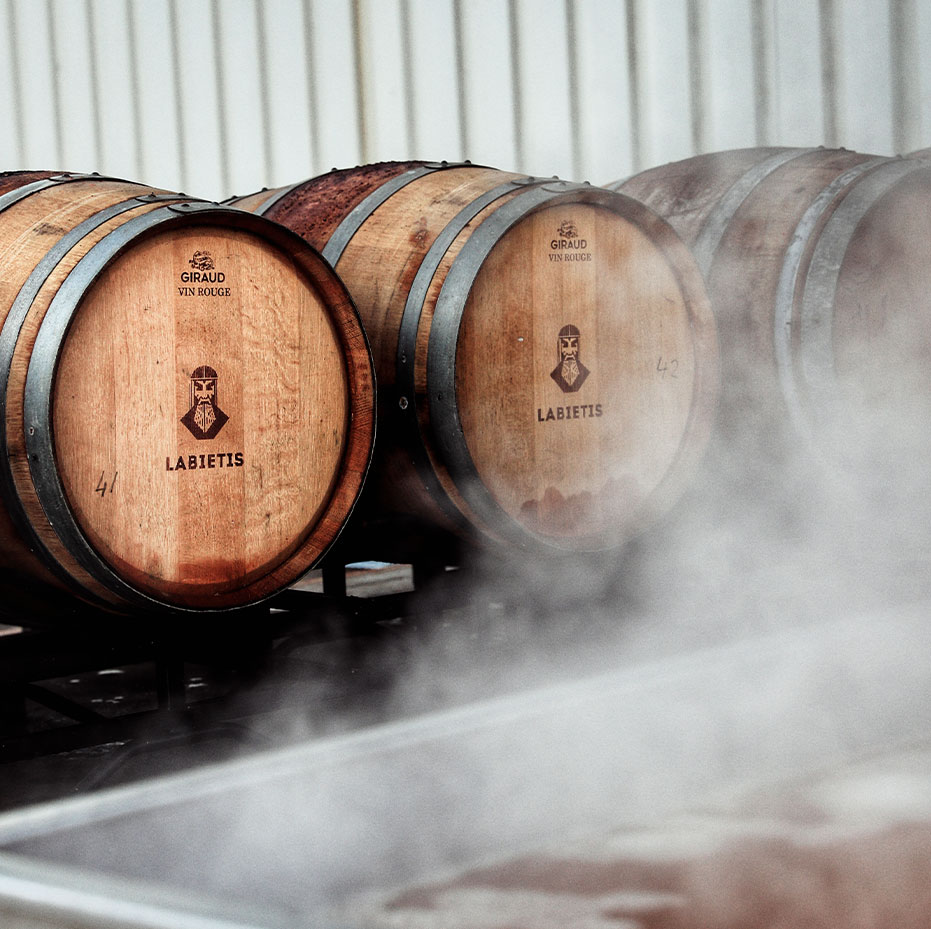
Even in his old age, the man stubbornly lugged sacks and barrels of malt – independently running his own small brewery – but one day Córdà got a stroke of luck when the old brewer tripped and twisted his ankle while carrying wheat destined for beer. This was Cord’s chance to break into the trust. The fat swot diligently stretched the sacks – the fashionable, raw skirts soon blew off and sweat broke out on the intelligent forehead. Cord spent a whole boiling cycle next to old Samir, silent and working (Cord had many questions, but the discomfort and dyspnoea caused by the work dampened them).
So, bag by bag, spindle by spindle, Cord became a carpenter’s apprentice. Semir did not officially announce it, but the old man did not drive Cord away either – Cord was not allowed to follow him into the fermentation room or into the warehouse, taking part in the process only by carrying weights. But one day, old Semir left the brewery door open.
Look at nature – hops is just one of many medicinal plants.
We’re fortunate to have grown up in Latvia, where every five-year-old has already taken their first steps in herbal medicine, and every adult has a selection of self-picked herbal teas in the kitchen. Our forests and meadows are unspoilt and abundant enough for this to be a real, lived experience. Hops is just one of over 20 medicinal herbs that we brew our beers with.
Retreat to Latvian nature with our beers!
The secret of acidbalus.
Cord saw everything with his own eyes. The initial reaction was horror, followed by denial, then horror again, then determination not to run for the food and veterinary services. Nobody except Korda and Semir knows exactly how the souring process took place. Based on modern methods, Semir could have had two ways of souring a beer (both equally horribly accurate to the German mind):
- Acidification in a pot. The old man did not boil the mash, he mixed half malted wheat, half malted barley and left it. The cool wort (malt-sweetened liquid) soon attracted all sorts of bacteria, including lactic acid bacteria, which are considered desirable in Berliner Weisse. It is possible that the already sour wort was boiled with hops, or that hops were added as a separate decoction (home brewing method).
- Yeast-friends. Old Semir had preserved a special mix of yeast and lactic acid bacteria, which the brewer, having brought from Flemish lands, used and maintained to ferment sour malt. This cocktail of bacteria could grow naturally in the brewery’s fermenters.
Halberstädter Broihan
Further events remain shrouded in fog. Soon after the recipe was discovered, the elder Semir passed away. Some say that Semir loved Kord as a son and left the inn and the brewery to the young German. Others say that the cosy Brouilan was cunning – he hired the old Flemish and bought back the brewery for a pittance, just before the gentrification of the district. Whatever the story, the pub flourished on the Korda farm. The young entrepreneur invested in marketing and events – he started to organise Bible readings, hired beautiful girls who served frikadele on bread and offered beer plates in small volumes. Cord proudly gave the brewery’s special beer – a cloudy, refreshingly sour kvass – the sonorous name Halberstädter Broihan. The business prospered, profits grew and the beer began to attract attention.
A Berlin doctor, or a polished and even more polished one.
One evening, a guest arrived at the pub. A young naturalist and doctor, Johann Sigismund Elscholtz, or as his friends called him – Zigis. As a proud man, Kord welcomed the educated visitor and personally entertained him at the brewery. Having brewed with bacteria and bacilli, Korda also began to consider himself a “such-and-such scientist”, so he felt particularly elated to know that he would be able to throw in a Broian with a ” colleague”. Zigi was intrigued by Cord’s brews, the unexpected sour taste obviously indicating lactic acid bacteria, but the brewing methods were unknown to the doctor. Expecting another empty glass, the young naturalist began to question Cord about recipes and brewing techniques, but Cord was not to be taken lightly.
The owner of the brewery explained that this is a special recipe that has been preserved for hundreds of years, passed down from master to apprentice. It is not enough to explain the process, you have to understand it and feel it with your senses, which only emerge after many years of experience. Aldaris tried to distract the doctor with frikadeli breads, but the young specialist did not give in.
After another cup, Zigis changed his strategy. He mentioned the involvement of bacteria and began to tell us in a whimsical way that in reality there can be no technology with bacteria, it is a game of chance and every brew depends on the whims of nature and not on the ability of the brewer. Cordes was offended by these words, bitterness, more bitter than hops, began to overwhelm the aldari – he had to prove to this green-skinned man his talent as an aldari. On that fateful night, in the palace, Córdus uttered a verse in the presence of Johann Sigismund Elscholtz, revealing the secret of the old Flemish Semir. The next morning the doctor was gone. Cord, curing a hangover, did not yet know what would follow.
Berliner Weisse arrives in Berlin.
It is not clear what happened to Korda in the end; he did not create other breeds and write a book about travel and food. The baton was passed to J.Z. Elscholtz, who shook up the Berlin beer landscape in the early 17th century. No rave or sit-down meal counted as a success without Elsholtz’s miracle sour. Through his extensive research into hygiene, Elscholtz was able to improve the quality and taste of sour beers, bringing cloudy wheat closer to the modern Berliner Weisse. Every self-respecting craft brewer began to replicate and try sour beer recipes.
At the height of its popularity, Berliner Weisse even took over the German court. King Friedrich Wilhelm I declared this style of beer “the best refreshment for our climate” and even sent his son Friedrich II the Great to learn the finer points of brewing Berliner Weisse. With its unusual taste, Berliner Weisse has also acquired unusual drinking habits. Don’t be surprised if, when you visit a Berlin pub, the innkeeper offers you a shot of beer syrup. This is not an attack on your taste or sexuality; sour beer simply tastes better with fruity and sweet notes.
This is why modern breweries are starting to experiment with the addition of fruit and its juice during fermentation to naturally replace or complement the use of syrup. Today, Berliner Weisse is enjoying a revival, slowly overtaking hoppy IPAs in popularity. With the return of craft beers to Latvia, many local breweries have started experimenting with this style of beer, so feel free to request a Berliner Weisse in your pub!
At Labietis you can enjoy Ledeni, a modern take on Berliner Weisse with tropical passion fruit, or Berliner Weisse’s cousin Goze, in the form of a salty-sour Tear.
More about Berliner Weisse:
http://allaboutbeer.com/article/berliner-weisse/
https://www.americancraftbeer.com/what-the-hell-is-a-berliner-weisse/
http://www.beerhunter.com/documents/19133-002947.html
https://beerandbrewing.com/dictionary/eH15TjQEIa/berliner-weisse/
https://learn.kegerator.com/berliner-weisse/