

Honey, Mead and Miestiņš
Explore the history of honey fermentation in Latvia and the traditional etymology of mead. We define the essential brewing terminology for using honey in modern beer and craft brewing.
Honey as a Source of Sugar
Honey is the most concentrated source of sugar found in nature—significantly sweeter than wild grapes, figs, or dates, which rarely exceed 16% sugar content. Like the skin of berries, raw honey harbors wild yeasts. The only thing preventing these yeasts from converting sugars into alcohol immediately is the high osmotic pressure; honey simply contains too much sugar for yeast to thrive. However, diluting honey with water in a closed container will trigger fermentation within days. This is a reliable way to check if honey is truly raw or has been pasteurized. Well-matured honey contains 81–82.5% sugar, almost all of which are simple sugars—predominantly glucose and fructose, with the occasional presence of the disaccharide sucrose. These are largely broken down by bees into the first two simple sugars within their honey stomach before being stored in the honeycomb. Aside from the Protea and Faurea plant genera found in the Southern Hemisphere—whose nectar can contain up to one-third xylose—the nectar of all other flowers and plants consists of these three specific sugars, which eventually end up in the honey. All three are excellent fuel for yeast—specifically Saccharomyces cerevisiae—which, in simple terms, consumes the sugar and produces alcohol and carbon dioxide. The remaining portion of honey consists of water (roughly 17%), as well as minerals and vitamins, the composition of which depends on the floral source. Consequently, when this honey-water mixture is fully fermented, the resulting beverage consists of alcohol, water, and less than 1% minerals and vitamins. It will certainly not be sweet, as the yeast will gladly consume every gram of sugar in the honey to convert it into alcohol and CO2.
A History of Mead
Simply finding a wild hive in the forest and dissolving it in water is enough to produce an alcoholic beverage within a few days. Many believe that a storm-felled, rain-soaked tree hive (dore) was the first fermented drink in human history; after tasting it, early humans likely began to intentionally imitate this accidental process. Interestingly, until the 18th century, the Latvian word for honey—medus—was used to describe both the bee product and the fermented drink itself. Furthermore, “honey boiling” is frequently mentioned as a core activity of local tribes in the Chronicle of Henry of Livonia and later sources.
In the Germanic branch of Indo-European languages, various derivatives of the word for honey still refer to mead (e.g., English mead or Swedish mjöd). In contrast, the Latvian word miestiņš is etymologically linked to the word “to stir” (maisīt). It stems from the Indo-European root mei, which signified change, stirring, and mixing. In the context of fermentation history, miestiņš most likely referred to beverages made from mixed sugar sources, such as honey, malted barley, and fruit. Consequently, it is technically incorrect to use “beer” and miestiņš as synonyms. The origin of the word for beer—alus—is also fascinating; it is derived from the Proto-Indo-European alu, meaning “bitter.” It is believed that honey drinks were enriched with various bitter herbs, including hops, for flavor balance or medicinal purposes. Later, alus came to specifically denote a malted barley drink, distinguishing it from mead and miestiņš, which could be sweeter and considerably stronger.
The fact that the ancient Balts were familiar with barley beer and hops long before the Northern Crusades is proven by historical records showing that both malt and hops were paid as taxes from the very beginning. Thus, beer made from malted barley and hops is an indigenous part of Latvian culture. During this era, local tribes were fermenting pure honey, brewing barley beer, and most likely producing honey-malt hybrids on a large scale.
It was only in the 17th century, with the decline of forest beekeeping due to the spread of agriculture and the Lutheran Church’s reduced demand for wax candles, that barley beer began to outcompete mead. In one record from 1624, a farmer near Riga paid a tax on 12 barrels of beer and only one barrel of honey sold at St. Matthias Church. Records from this time also indicate that fermented honey in Vidzeme was three times more expensive than barley beer, which explains the shifting relationship between these beverages.
Historical Mead Recipes
Several honey recipes from this period have survived. In all of them, the honey is diluted with water and boiled while skimming off the foam. It is important to remember that modern beekeeping only began in the 18th century; prior to that, honey was obtained by raiding wild hives. Honey was not available in its pure form but was harvested along with wax cells, bees, and other hive debris. Boiling allowed these unwanted components to be strained out before the yeast was added. The honey-to-water ratios in these recipes range from 1:6 (yielding ~7% ABV) to 1:2. In the latter case, where the volume was further reduced by evaporation during boiling, the sugar concentration would have been high enough to theoretically reach 25% ABV.
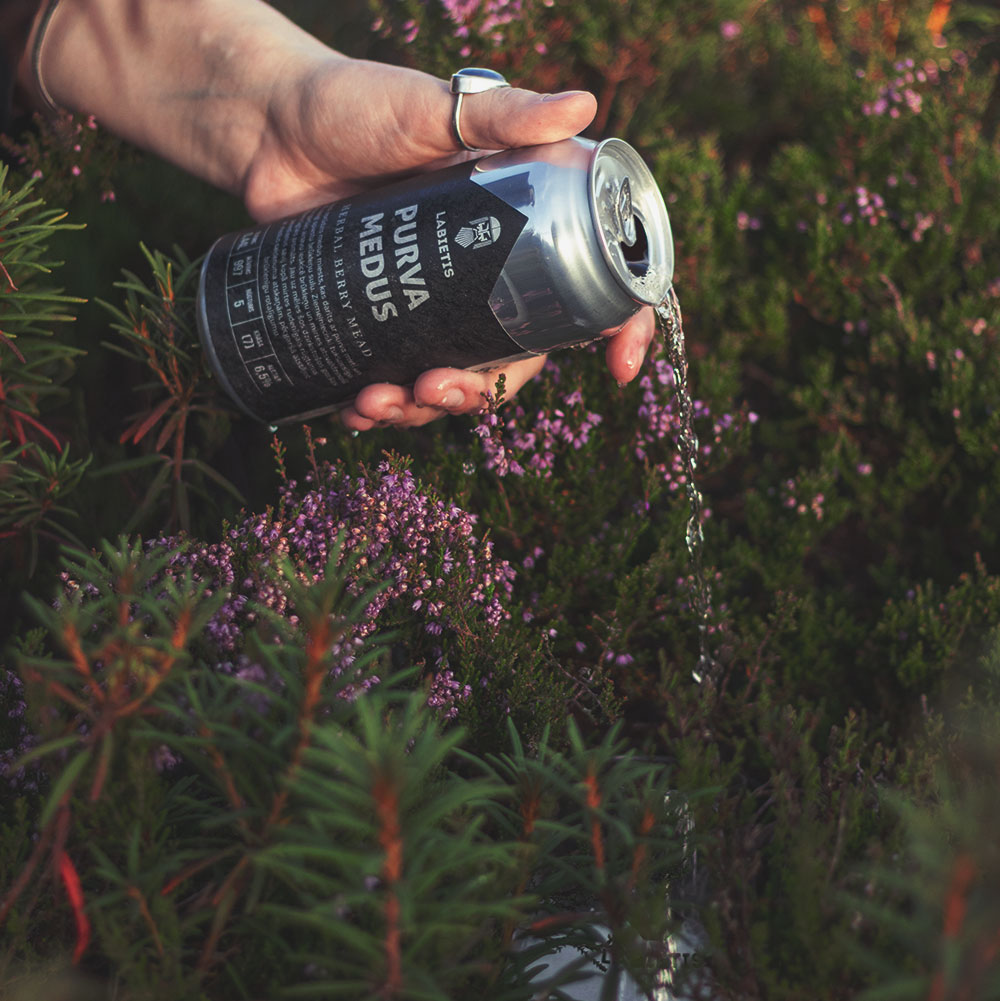
Unfortunately, such high concentrations can only be reached by modern, specialized wine yeasts that require “nutrient cocktails” to strengthen their cell membranes against the toxic levels of alcohol. It is unlikely that medieval wild yeasts could exceed 13% ABV, likely stalling around 10%. In such cases, fermentation would stop because the alcohol became intolerable for the yeast, leaving a significant amount of residual sugar—roughly 250g per liter. This drink would have been the most intoxicating beverage of its time, as nothing stronger than ~13% was known before the advent of distillation.
How to Achieve Sweetness.
Historically, there were three ways to ensure a mead stayed sweet:
1. High Concentration: As described above, the yeast stalls, leaving residual sugar.
2. Drinking it “Young”: Drinking the beverage before fermentation is complete. However, historical sources suggest a fermentation period of 2–3 weeks, meaning Latvians generally did not consume unfinished brews.
3. Sweetening (“Honeyed Beer”): Adding fresh honey to a finished, fermented drink. Folk songs suggest this was very popular. Since there was no way to measure alcohol content, sweetening a drink with honey may have been a tactic to make a drinker believe (and pay for) a 13% mead, when they were actually drinking a 6% barley beer with a spoonful of honey stirred into the mug.
Interestingly, this practice of sweetening beer with honey began to emerge just as honey prices were soaring in the 17th century.
Linguistic Precision: Mead, Honey-Beer, or Miestiņš?
Modern Latvian brewers often use the terms medalus (honey beer) and miestiņš on their labels and in marketing, as honey symbolizes both health and a natural treat. Unfortunately, current legislation does not require brewers to list all ingredients on the label, nor must they state whether the beer has been filtered, pasteurized, or treated with additives like sulfites. Consequently, the names “mead” or “miestiņš” are often applied to a wide variety of beverages that share only a symbolic connection with real honey.
Based on the historical and etymological excursion above, we propose five categories for fermented honey beverages. Below is a description of their flavor profiles and what should be listed on the label if we prioritize complete transparency for the consumer:
Therefore:
1) Fermented Honey (Traditional Mead) – a drink made from water, honey and yeast. Such a drink may be sweet if it has over 13% alcohol and the ratio of honey to water was originally over 1 to 3, but weaker versions will always be dry and, apart from the bite of the alcohol, rather tasteless.
2) Mead – a drink made from water, honey, herbs (hops and chervil are the most popular, but many others are available) and yeast. Like honey, mead can be sweet if it is over 13% alcohol. In other cases, it is a dry, bitter drink with an alcoholic tang and an added herbal flavour. A good example of how this type of mead should taste is Labieša Zintnieks.
3) Miestiņš (Mixed-Source Brew) – a drink fermented from a mixture of sugar sources, or a mixed mash. It may contain malt, honey or berry juice sugars in various mixtures, supplemented with herbal additives. Such a drink can be either sweet or dry, but honey cannot be a source of sweetness below 13 %, as the sugars it contains are easily converted into alcohol by the yeast. Any residual sweetness would have to come from complex malt sugars or added sugars such as lactose. In this case, it would be courteous of the producer to indicate on the label both the percentage of honey that has been added to the wort and the other raw materials.
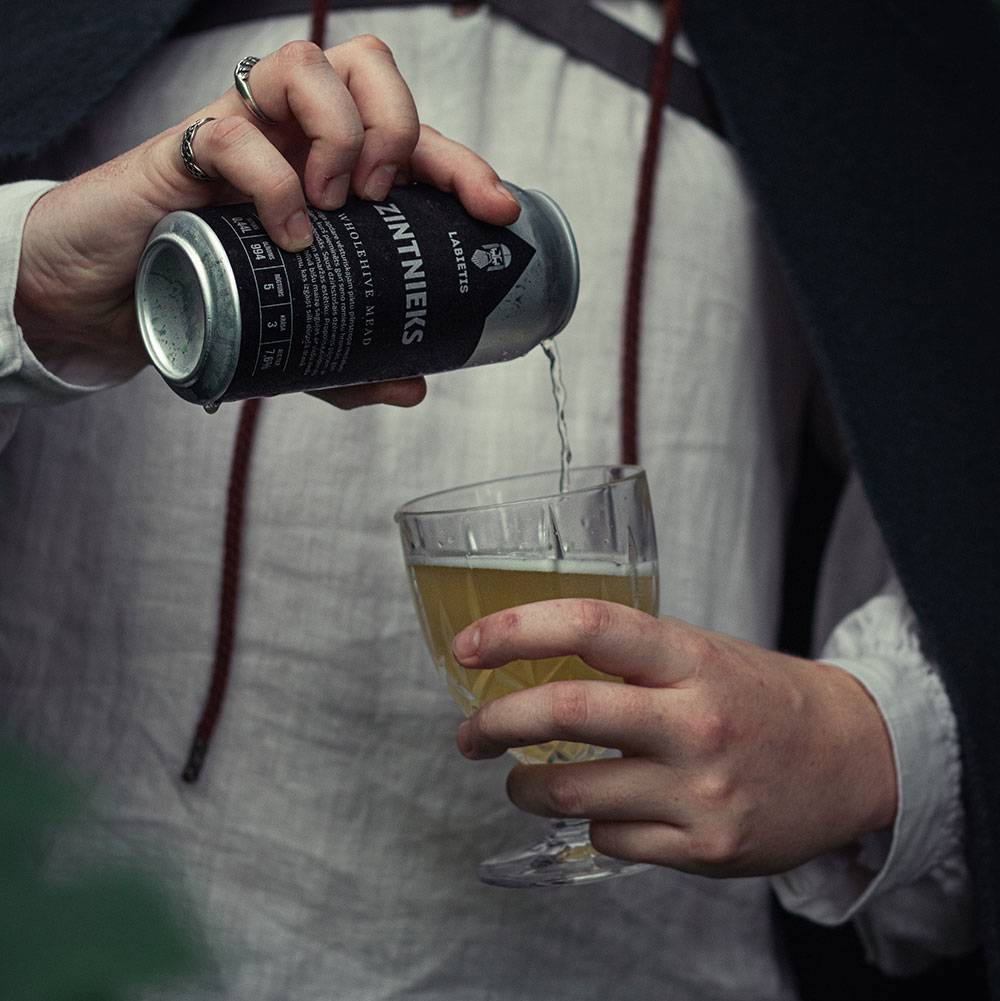
4) Honeyed beer – this drink is made like regular beer, with honey added after fermentation to make it sweeter. Unlike in the case of miestiņš, honey is added after fermentation has finished. In this case, it is necessary to pasteurise the drink or to ensure that no further fermentation can take place with sulphites, so that the added honey sweetens the beer rather than making it stronger over time and blowing up the bottle on the shelf.
5) Honey-flavoured beer – it’s no secret that there are no crabs in crab sticks. Similarly, the taste of honey can be achieved without honey. If the honey flavour is achieved in this way, it would be correct to indicate this on the label. The aim of this article is to encourage producers to be honest with their consumers, both in naming their products correctly and in correctly representing the raw materials on the label. It will also help beer lovers to critically evaluate the merits of their favourite beverages.
LIST OF REFERENCES USED
- Dumpe, Linda. Beer traditions in Latvia – Latvian Institute of History Publishing House. ISBN 9984-601-63-3
- Karulis, Konstantīns. Dictionary of Latvian etymology.– Source: Riga 2001, – 1304 pp. ISBN 9984-700-12-7
- McGovern, Patrick E. Uncorking the past – University of California Press: Los Angeles 2009, – 330 pp. ISBN 978-0-520-26798-5
- Nelson, Max. The Barbarian`s Beverage – Routledge: New York 2005, -213 pp. ISBN 978-0-415-48692-7
- Unger, Richard W. Beer in the Middle Ages and the Renaissance – University of Pennsylvania Press: Philadelphia 2004, – 319 pp. ISBN 978-0-8122-1999-9