

FOOD AND BEER.
Martini feast in three courses
We’re fortunate to have grown up in Latvia, where every five-year-old has already taken their first steps in herbal medicine, and every adult has a selection of self-picked herbal teas in the kitchen. Our forests and meadows are unspoilt and abundant enough for this to be a real, lived experience. Hops is just one of over 20 medicinal herbs that we brew our beers with.
Retreat to Latvian nature with our beers!
Why does the Good Man eat?
When we think about where we are on the world beer map, we are in an enviably comfortable position. Namely, we have unique deals in our portfolio that best describe the taste of Latvia. And why not blend these flavours with the traditions of Latvian cuisine?
How does a Good Man eat?
Let’s start with the fact that a Labietis eats in seasons. And in a prim way. Always in multiples. A Labian eats simply and traditionally, without being shy about making the taste, shape or presentation contemporary. Chef Andris Ūpis takes care of Labietis’ appetite.
What does a Labietis drink when he eats?
The best way to quench your thirst during the meal is with drinks selected by Labietis’ manager Reinis Pļaviņš, which are matched with the fruits of the chef’s labour. It is very important to remember that the recipes we will share have been created with the compatibility of our beers with Latvian culinary flavours in mind. However, we by no means insist that our choices are the only right ones.
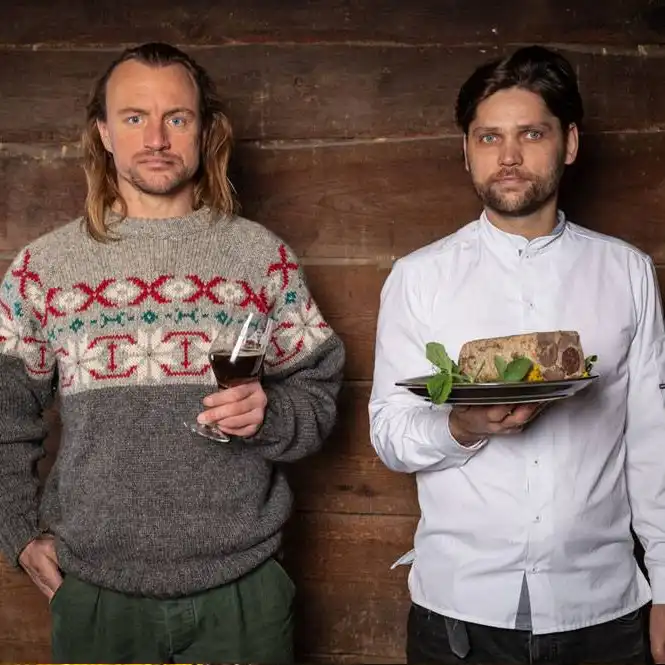
BAKED KEFIR WITH APPLES IN HONEY SYRUP AND CRANBERRY PUREE
For the baked kefir
200 g 2% kefir
200 g condensed milk with sugar
200 ml 35% sweet cream
Dried apples in honey syrup
50 g dried apples
150 ml water
70 g sugar
70 g honey
2 cinnamon sticks
For cranberry puree
200 g fresh or frozen cranberries
60 g sugar
Baked kefir
Preheat the oven. 150 degrees will do.
Find a bowl. Pour the kefir, condensed milk and cream into a bowl and whisk everything together.
Pour the mixture in equal quantities into heatproof containers. Coffee cups or small clay bowls are also suitable.
Pour hot water into the oven tray, place the dishes in the tray and tap the water to cover 1/4 of the dish. Place the tray in the oven and bake for 15 minutes at 150 degrees.
Remove the tray and allow the cream to cool. Now you can drink your beer, but in general you still need to work on your presentation.
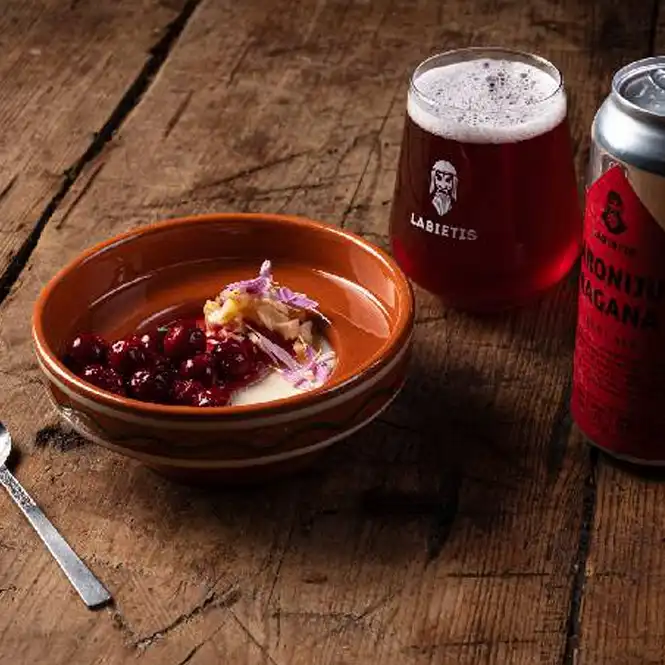
Dried apples in honey syrup
Take the dried apples and cut them into small cubes.
Pour water into a saucepan, add sugar and honey. When the sugar syrup starts to boil, add the cinnamon sticks, the dried apples and remove the saucepan from the stove, pour into a bowl and let everything strain and cool.
Cranberry puree
The cranberries are muddled with sugar. When serving, pour over the baked kefir together with the dried apples.
Which beer to choose? Aronia Witches The acidity and tanginess will allow you to better appreciate the sweetness of the baked kefir and open your tongue to the tanginess of the baked cream.
BEAN CAKES IN A BREAD AND HEMP SEED BREADING
Bean bombs
500 g cooked beans
Small onion
3 cloves garlic
100 g smoked pork breast
Egg
2 g ground cumin
2 g ground caraway
Salt to taste
2 g smoked paprika powder
1 l rapeseed or sunflower oil
For success
For the butter:
3 eggs
100g shelled hemp seeds
200g breadcrumbs
200g 20% sour cream
400g blood sausage
For the lingonberry sauce
200 g fresh or frozen lingonberries
Garlic cloves
1 chilli
40 ml apple cider vinegar
40 g honey
Bean bombs
Start with the garlic and onion, cut them up. Then dice the smoked pork breast.
Add a little oil to the pan, heat. Put the onions and garlic in the pan, when the onions start to brown, add the meat. Fry the meat and add the cooked beans; if using canned beans, rinse them first. Add all the spices.
Bake for five minutes, stirring all the time. Put the finished mixture in a metal bowl and add the egg. Using a hand blender, blend the mixture a little, leaving some of the beans whole, and allow the mixture to cool.
While the mass melts, have a beer. Drink more beer and turn to the buttermilk.
Panama
Spread the hemp seeds on a dry, cold pan. Toast the seeds over a low heat until lightly brown, add the breadcrumbs and continue to toast for one minute, stirring all the time.
Remove the pan from the stove and immediately tip the crumbs into a bowl.
Beat the eggs in a separate bowl.
Once the bean mass has cooled, continue making the balls and enjoying the beer
Roll the cooled bean mixture into medium-sized balls.
Once the mass has been rolled into balls, they must be kneaded. Dip the ball in the egg mixture, then roll in the breadcrumbs. Repeat the process one more time in the same order.
Once all the bean balls have been removed, pour a litre of oil into the saucepan. Heat the oil to 170 degrees (the oil should be boiling actively when the ball is put in). Carefully, using a whisking spoon, place the bean ball in the hot oil. You can fry several balls at the same time.
Cook the balls in the oil for one and a half minutes, then remove the balls from the oil with a whisking spoon and place on a paper towel to drain off any excess oil. The bean balls can be eaten hot or cold.
Clotted cream
The cream is best made the night before. You will need a fine sieve or cheesecloth.
Pour the cream into a sieve and hang it over the bowl to drain.
Lingonberry sauce
Cut the garlic and chilli into rounds.
Pour the oil in the pan, add the garlic and fry golden brown. Add the chilli and honey. Stir, add apple cider vinegar and add the lingonberries.
Cook over a medium heat for 10 minutes. When the sauce is ready, pour into a bowl and leave to cool.
Fried blood sausage
The sheath is removed from the blood vessel. Place on a cold pan and fry over a medium heat, stirring all the time.
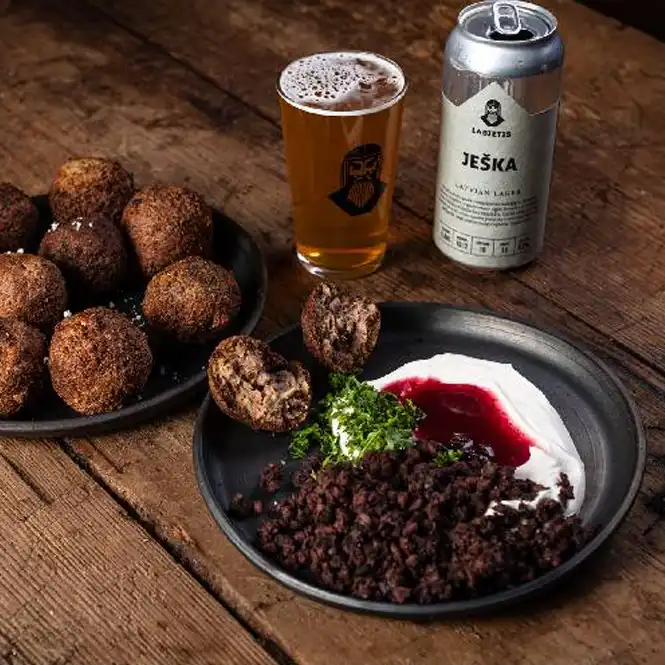
The blood sausage is fried until brown and crumbly. When ready, spoon the mixture into a bowl and serve with bean balls, clotted cream and lingonberry sauce.
Which beer to choose? It is advisable to overcome the strong taste irritation to which the eater is subjected by the herb-enriched blood sausage with Ješka. The blood sausage is sweet, the bean clumps are mild. The cream is also mild. Nothing shouty is appropriate here. Ješka is a ‘Latvian grey’, which allows this tenderness to be brought out elegantly. If anyone finds this snack too thin, Pepper will be the right beer to toast the spicy nature of the blood sausage.
ROAST GOOSE WITH OVEN-ROASTED POTATOES, ROAST CABBAGE AND CARAMELISED APPLES
Goose roast
A whole goose with all the giblets
1 kg apples, preferably sour
3 large onions
A head of garlic
200 g buckwheat
100 g cranberries
10 juniper berries
3 cloves
3 g black pepper
2 g ground cumin
40 g salt
2 sprigs rosemary
100 g breadcrumbs
For the apple and quince glaze sauce
1 l apple juice
200 ml quince syrup
4 cloves garlic
4 juniper berries
2 g caraway
2 g cumin
1 chili
4 g salt
For baked potatoes
2 kg small potatoes
100 g butter
50 g dill
2 cloves garlic
10 g salt
For the fried cabbage
1 small cabbage
50 g butter
100 ml vegetable broth
1 tablespoon apple cider vinegar
15 g salt
Ground pepper
For caramelised apples
1 kg apples
50 g sugar
20 g butter
40 ml apple cider vinegar
1 sprig of rosemary
Ground pepper
Roast goose (prepared the day before serving)
Blend the garlic with the cranberries and season with salt.
The internal fat is removed from the goose. Keep them in the fridge for later use.
Rub the prepared salt mixture into the goose, both inside and outside, with force.
Wrap the butchered goose neatly in cling film, place it on a tray and leave it in the fridge overnight.
When the work is done, it’s time for a beer.
Cooking Day
Apple and quince glaze sauce
Pour the juice and syrup into a saucepan and pour the cooled Jeska into a glass.
Add all the spices and cook over a medium heat until a third of the liquid remains. The glaze is ready. Set aside to cool.
Drink beer until the glass is dry and you have the courage to tackle the goose stuffing.
Goose stuffing
Pour a little frying oil in a pan, heat.
Coarsely chopped onions and garlic are fried in a pan, when the onions start to brown, add the chopped goose liver and heart. Stir everything and remove the pan from the stove.
Bring 300 ml of water to the boil and add 5 g of salt.
Scrape the buckwheat into a metal bowl and cover with hot salted water to swell.
Remove the cores from the apples, cut them into large chunks.
Take a large bowl and mix together the buckwheat, apples, fried onions and liver.
Add the spices (cloves, cumin, juniper berries, black pepper). Add the breadcrumbs and rosemary leaves, then stir well and push into the goose.
When the goose is full, it is sewn or plugged with bamboo skewers.
Baking
Preheat the oven to 200 degrees.
The pan in which you roast the goose must be deep. A roasting tray is best.
Place the goose in the pan, breast side up, and shoot into the oven.
Roast for 20 min, then turn the roast breast-side down, reduce the heat to 150 degrees and continue roasting for two hours, basting every 40 min with the liquid that has accumulated in the pan.
After two hours, raise the oven temperature to 200 degrees, brush the roast with the applesauce and bake for a further 15 minutes.
Take the roast out of the oven and check if it’s ready – if the juice of the roast comes out clear when you prick the shank, it’s ready.
Additives for roast goose
Baked potatoes
Wash the potatoes, put them in a saucepan, cover with cold water and add a tablespoon of salt. Boil until the potatoes are medium soft, then peel and cool.
When the potatoes are cool, cut them in half lengthwise.
Add oil or goose fat to the pan. (The fat must have been melted and passed through a sieve.)
When the pan is hot, scrub the potatoes on top, fry over high heat until dark brown.
Finally add the butter, finely chopped garlic and herbs.
Roast cabbage
Cut the cabbage vertically into four thick slices (with the whole stem).
Heat a frying pan without grease, place the cabbage on top and brown on both sides.
Add the butter, salt and ground pepper.
Pour the broth and apple cider vinegar on top. Cover and simmer for 10 minutes.
Horseradish sauce can be made to accompany the sauerkraut: stir one tablespoon horseradish into 100 g cream cheese, add 100 g sour cream and salt to taste.
Caramelised apples
Cut the washed apples in half and remove the seeds.
Add the sugar to a warm pan.
When the sugar has melted and turned dark brown, arrange the apples flat-side down on the pan.
Bake for two minutes. Add butter, rosemary, pepper and a little salt. Add the apple cider vinegar and leave to caramelise for 5 minutes.
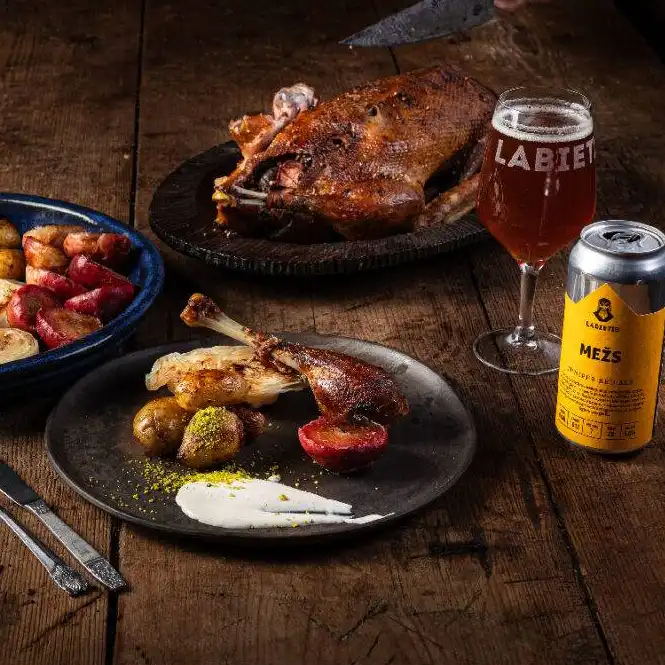
Which beer to choose? The goose’s sour-sweet apple glaze with cinnamon, caraway and juniper character and the way the roast is cooked call for a fruity ale. The goose is caramelised, as is the malt. In addition, both allies are accompanied by a common juniper resinousness. Roast and accompaniments Labietis recommends serving with chilled Forest.