

Ale or Lager?
A Generalized Introduction to the Differences
“We only have ales.” “Damn it! But I want a beer!”
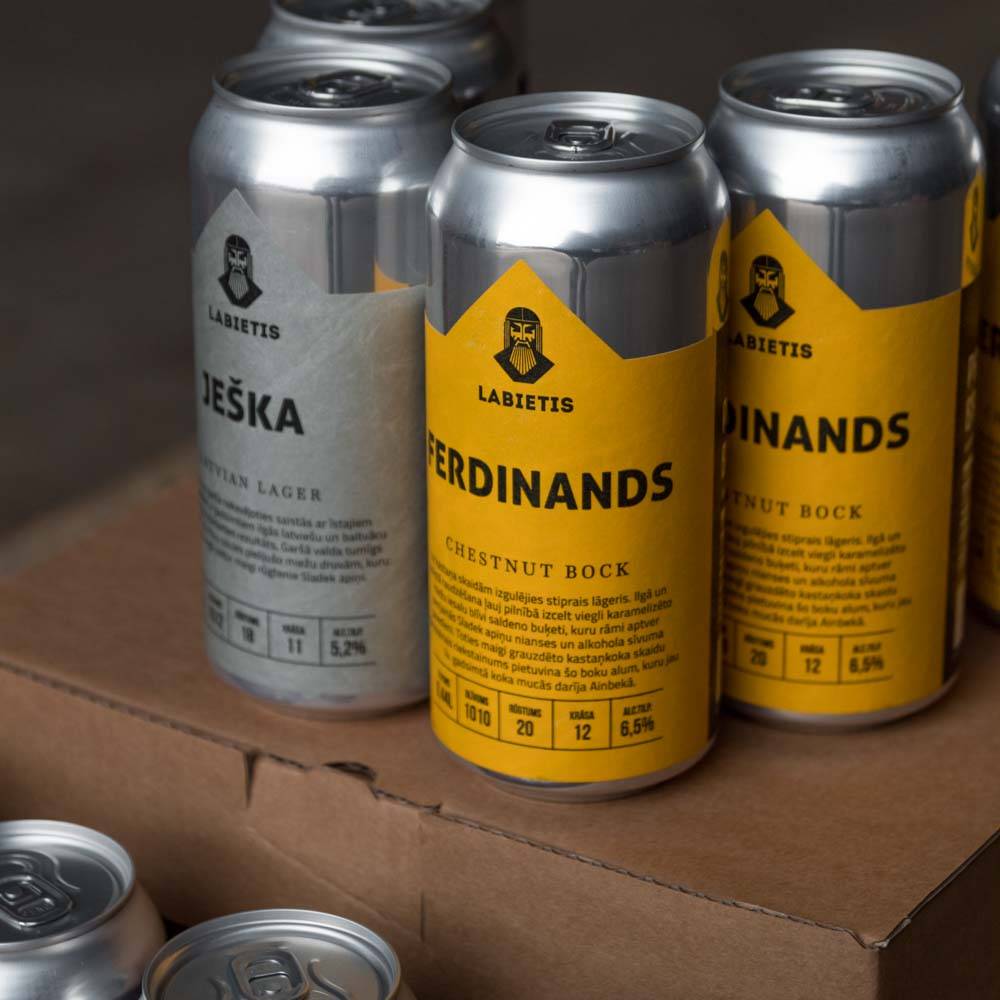
Continuing our theme of foreign words, let’s briefly and definitively distinguish between an ale and a lager. Some pub-goers still fall into a solemn awe when they hear that Labietis brews only ales. This charming word that rolls so pleasantly off the tongue—”ale”. It makes you expect that something extraordinary is about to happen. Something straight out of King Arthur’s Round Table legends and overcast London. For others, unconcealed disgust creeps into their faces. Ale? What kind of ale?!
They came for a refreshing, hoppy pint, not some murky brew from the British Isles. Those English don’t even know how to brew a normal beer anyway! In reality, both reactions unnecessarily complicate life!
Both ales and lagers are beer. Both can be bitter, sweet, dry, or full-bodied (as well as any other adjective), depending on the ingredients and brewing skill.
The single, main difference is the yeast strain used: Saccharomyces cerevisiae or Saccharomyces uvarum (known as Saccharomyces carlsbergensis before scientists actually tasted Carlsberg and decided to sever all ties with the term). These long Latin names are responsible for all the differing characteristics.
Hot vs. Cold – The Role of Temperature in Beer Flavor
The primary difference between an ale and a lager is the fermentation temperature. Ales ferment at room temperature, between 12–20°C (when fermenting saison-style beers, the temperature can climb up to 30°C, creating “defects” that the Belgians baptized as traditional flavor). At this temperature, more fusel alcohols and esters are released, creating a “broad” flavor bouquet. This is exactly why, to an inexperienced ale drinker, the first few sips might seem intense, even exaggerated.
Lagers originated later—when innovative cellar-digging technologies allowed for fermentation experiments at lower temperatures (7–12°C). The low temperatures helped achieve a “cleaner” beer; it became lighter in flavor and crisper on the palate. There is no right or wrong answer here. It’s like comparing whether a rich chocolate meringue cake is better than a light, crispy wafer cake. Both are desserts, both are cakes, but they satisfy completely different tastes.
It All Started with Ale
Ever since ancient proto-brewers accidentally infected their wort with yeast and kickstarted a millennia-old brewing culture, people have been drinking ales. Ancient Egypt, Mesopotamia, the Chinese Empire—every civilization worth talking about brewed beer, and the only brewer’s yeast capable of fermenting wort before the era of ice cellars was ale yeast. To talk about the history of ale is to talk about the entire history of brewing right up until 16th-century Bavaria, when the first lager-like brews appeared. Ales are beer in its most traditional and ancient form. To speak in marketer jargon, ale is the real-original-traditional-ancestral beer. The whole world, including the Czech Republic and Germany, drank ales until Bavarian purity began to falter.
How German Dukes Regulated the Lager into Existence
Despite German precision, 16th-century Bavaria suffered from an unpleasant problem: summer beers often tasted sour and otherwise defective. Flavor-ruining bacteria would invade the open-top fermentation vessels, spoiling the beer. Brewers tried to fix the situation in true craft beer fashion—with sawdust, soot, ox gall, and even chicken blood—but the beers still matured strangely. This lack of quality noticeably ruined the Bavarian court’s BBQ parties and boys’ nights out. Unlike the Belgian summer workers (saisonniers), Bavarian patricians were not willing to simply put up with the taste of summer beer.
Furthermore, the presence of chicken blood frankly seemed a bit weird. Therefore, in 1487, Duke Albert IV of Bavaria ordered brewers to publicly swear off experimenting with animal fluids and to use only hops, water, yeast, and malt (this later led to the infamous German Beer Purity Law, or Reinheitsgebot, in 1516). Despite these early food and veterinary safety regulations, the beer still soured and tasted unacceptable to the German nobility. For almost a hundred years, the wise heads complained, punished, and regulated, but the beer didn’t improve. Finally, Duke Albert V showed some spine, threw his hands up in frustration, and declared that Bavarian brewers would no longer brew beer in the summer. If you can’t do it right, don’t do it at all! The court cheered, but the brewers scratched their heads and wondered what to do.
Just as the Belgians turned summer beer defects into a traditional flavor, German brewers embraced this new restriction as a crucial element of their brewing culture. From then on, Bavarian brewers only brewed beer from autumn to spring. However, people want to drink beer all year round, so brewers started racking their brains over maturation. This led to the development of ice cellars and the use of alpine caves for storing beer. Longer storage also meant that the beer usually needed a moderately high alcohol content (6-7%) to survive. As a whole, this process was christened “lagering” from the German word lagern (to store). This kind of cold conditioning made the beer’s flavor “cleaner” and allowed the yeast to neatly settle at the bottom of the cask—making the beer clear and crisp. But this was not the lager as we know it today! The Bavarians weren’t brewing a traditional golden-luxury-premium lager; it was more of a dunkel—a bronze-colored beer with distinct caramelized notes, which was still essentially fermented with an ale yeast strain. The true lager yeast came from afar.
The Aliens – The Arrival of the Modern Lager
Despite mass-market beer promotional materials, the modern lager didn’t originate from a family brewery, the Czech Republic, or Bavaria. Scientists estimate that the lager yeast parent, Saccharomyces eubayanus, was born in Patagonia, South America—11,000 kilometers from the Bavarian Alps. Researchers have discovered that this yeast is a 99.5% match for the non-ale DNA portion of Bavarian lager yeast. To this day, a more similar yeast strain has not been found in the wild. It is not exactly clear how this yeast traveled to Bavaria to hybridize with local strains, but transatlantic shipping definitely helped. The yeast could have hitched a ride on fruits, in fermented beverages, in the digestive tract of a fly, or even in wood. This modern lager hybrid thrived comfortably at low temperatures, eventually leading to the creation of the first extra-ancestral pale lager in Munich in 1894 (combined with British malting technology). Munich’s most hipster tavern of the time, Spaten, kickstarted a new trend of Helles-style beer—lighter, fresher, and crisper than its amber contemporaries.
California Wants Its Own Beer!
Experiments with temperatures didn’t end with the creation of the lager. As soon as a stable lager yeast strain was established, there were artisans who viewed the rules as a mere challenge. When 19th-century American brewers heard that the lager fermentation temperature was under 12 degrees, in true pioneer spirit, they brewed a batch, pitched the lager yeast, and stubbornly left it in the heat. When their German colleagues objected: “Aber das ist kein Lager!” (German for, “Hey guys, you’re brewing our beer wrong!”), the Americans mumbled something back about freedom, the size of their genitalia, and dumped a whole bucket of hops into the tank. The result was Steam Beer—a special American lager style characterized by a distinctly hoppy flavor and bold yeast esters, which are produced when lager yeast is forced to work faster. Of course, this lasted until Anchor Brewing Co., in true American fashion, trademarked the term “Steam Beer,” transforming the official style name into California Common.
Ale
- Top-fermentation (yeast produces a protein layer and mostly thaws at the surface)
- 12 – 20 degrees (with exceptions >30)
- Ales have been used in brewing for the longest time, from the beginnings of fermentation to the present day.
Lager
- Low fermentation (yeast settles at the bottom of the tank)
- Temp. 7 – 12
- First experiments ~15th century, widespread use in the 19th century
- Flavours: crisp, light.